

Looking through the crystal ball: Tomorrow's medicine

What will medicine hold in store for us in five to ten years? And what will be the role of radiology? We asked experts on the topic. Their answers are encouraging - but they also touch on some sensitive issues.
When Associate Professor Dr. Mirjam Gerwing looks to the future, the radiologist sees “everything as a whole.” A dashboard appears before her mind's eye, which contains all the relevant information that the Deputy Director of the University Institute for Diagnostic and Interventional Radiology at Klinikum Lippe GmbH L needs for her work: the radiological images, of course, the laboratory results and the treatment history. “And when I click on a lesion, the software has already integrated volumetric measurement, segmentation, and preliminary examinations, and maybe AI could suggest current studies that could be relevant to this case.”
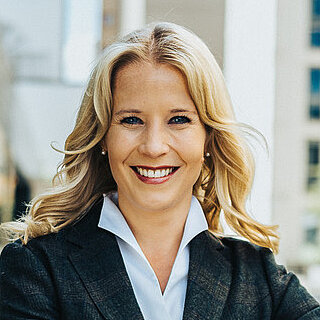
Priv.-Doz. Dr. Mirjam Gerwing
President of the Rheinisch-Westfälische Röntgengesellschaft e.V.
This is a vision that could well become reality in the not too distant future. But what is required in terms of technology, organization, politics, and society to ensure that progress also spells progress for the medicine of the future? We discussed this with experts.
Is “Google radiology” imminent?
Mirjam Gerwing, who has been president of the Rheinisch-Westfälischen Röntgengesellschaft e. V. (RWRG) (Rhine-Westphalian Radiological Society)) since November 2023, has a clear vision of the role of her profession: “I see us in radiology as guides for the patient's journey.” At the same time, she is well aware of the concerns of her colleagues, who fear that the hype surrounding AI and budget constraints will lead to the cannibalization and marginalization of radiology. To give an example, the idea that an orthopedic practice could use AI models to make diagnoses outside its area of expertise no longer seems entirely far-fetched. In particular, the new possibilities offered by AI could lead to other disciplines pursuing this goal - even to the point of a “Google Radiology” scenario, in which image acquisition can take place entirely without medical supervision and where patients can upload images to a platform where they are then evaluated by AI.
For Gerwing, this “would not be a viable option, also from the perspective of patients, who naturally expect high-quality medical care.” In her view, it is also out of the question for AI to make independent diagnoses - which is not to say that this will not be possible in the distant future. After all, technological progress is unpredictable. This makes Gerwing feel even more strongly that it is her profession's duty to keep up with the times through continuing further education and training and to be aware not only of the new opportunities but also of the risks that progress involves. The “AI License,” which was offered for the first time at theRuhr Radiology Congress 2024, acts as an example of the necessary qualifications.
What should data management entail?
What appears to be clear, is that the trend towards centralization will continue, whether in the form of networks of individual practices, large radiology centers, or also joint solutions at the hospital level. As far as the latter is concerned, Prof. Dr. med. Djordje Nikolic L, Managing Director of the consulting agency consus.health, tends to be optimistic: “I am convinced that the pressure to act is so great due to the shortage of skilled staff, the economic situation, and the consequences of the hospital reform, that the situation for clinics will not be worse in five to ten years than it is today.” Admittedly, “not everything will be fine by then,” and problems such as too few service providers or too long waiting times cannot be ruled out, “but long-overdue structural measures and adjustments will have been implemented.”
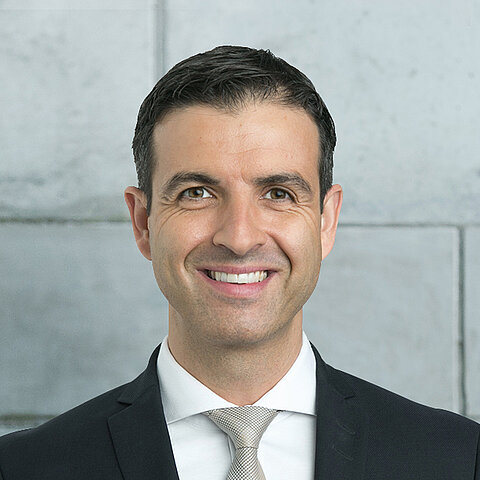
Prof. Dr. med. Djordje Nikolic
Managing Director consus.health
According to Dr. Katharina Ginter, Senior Consultant Digital Health at Digital Avantgarde GmbH , one of the challenges that needs to be addressed in-house is the consolidation of data management. Ginter has identified over 200 different software applications in the hospitals she advises on their digitization strategy. Interoperability and a “complete and up-to-date as possible central database” are therefore more imperative than ever.
Will the paradigm shift be successful?
Yet as crucial as technological innovations may be for more precise diagnostics, better workflows, and for reducing excessive bureaucracy, they alone will not be enough to make the medical profession more attractive again in the future. To counteract the shortage of skilled staff, a different workplace culture is also needed in medical practices and clinics. “If we are honest with ourselves, most hospitals have not even attempted to address the issue of ‘New Work’,” says radiologist Mirjam Gerwing. She herself tries to explore new avenues as much as possible and to strengthen interprofessional cooperation through regular team meetings.
Katharina Ginter, who obtained her doctorate at the Charité before deciding to switch sides, would also like to see more of this. “Many of the tasks currently reserved for doctors could just as easily be performed by other professional groups,” she believes. When talking to the 30-year-old, one often hears terms such as “goodwill,” “respect,” and also “error culture” - basics in professional interaction that wouldn't even cost much money to implement.
This also applies to what is probably the greatest challenge: changing perspectives within the second most expensive healthcare system in the world, which nevertheless sometimes still falls short of achieving the best possible outcomes for patients. For consultant Djordje Nikolic, the key question is precisely this: "Do we as a society want to continue defining healthcare purely on the premise of treating the ill? Instead, the approach to maintaining health and secondary and tertiary prevention should be given a completely different status. After all, preventing illness is an entirely different logical structure for a healthcare organization than the principle of promoting organization, responsibilities, and compensation principles only once illness has occurred and requires treatment."

Dr. Katharina Ginter
Senior Consultant Digital Health, Digital Avantgarde GmbH